
Robotic knee replacement in Antalya
Computer-navigated knee replacement positions the implant with an accuracy of about 1 mm. Less pain, less blood loss and a faster return to walking.
- 1 mm accuracy
- Free X-ray review
- Free airport pick-up
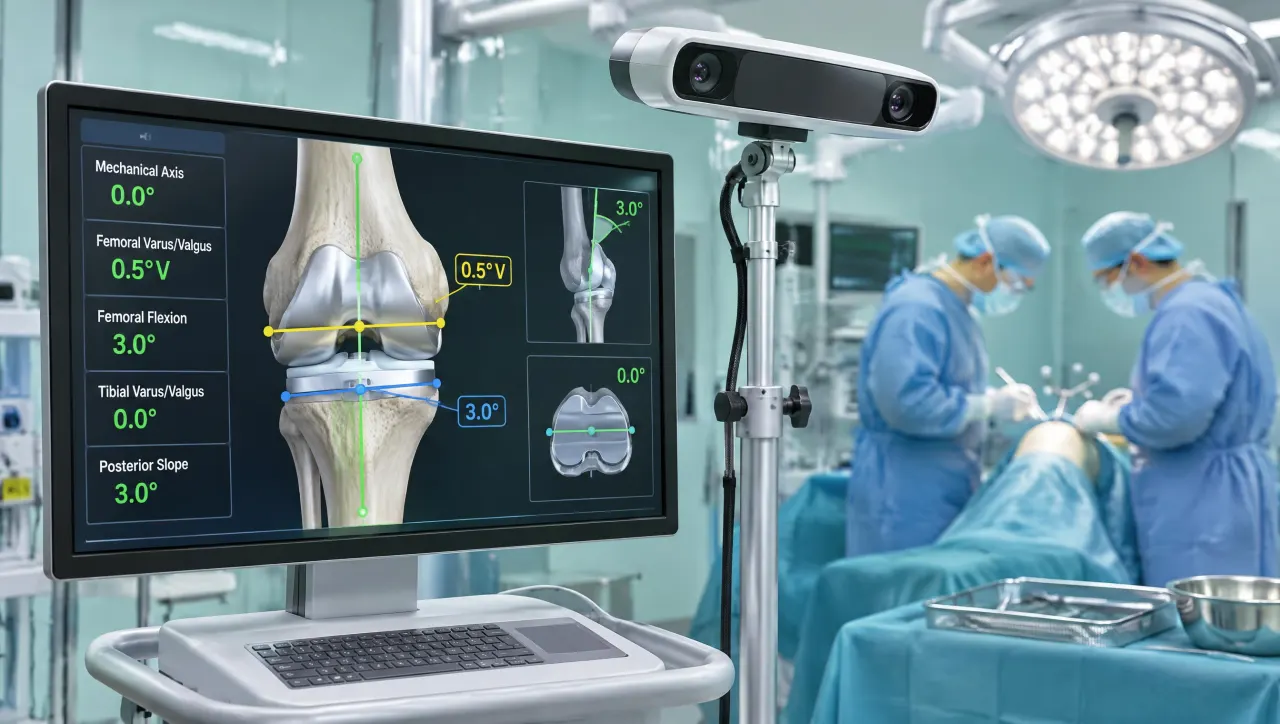
Like the navigation in your car, but for your knee
- Your knee is mappedMarkers on the thigh and shin transfer the shape of the knee and the position of the hip and ankle to the computer.
- The operation is planned on screenImplant size, bone cuts and alignment angles are calculated on a virtual model.
- Every step is verifiedThe system shows each cut before it is made, and the surgeon checks every step on the monitor.
Prof. Dr. Levent Altınel
Orthopaedics and traumatology specialist. Graduate of Ege University Faculty of Medicine (1994); specialist training at Istanbul University Istanbul Faculty of Medicine (1994–1999). He took part in hip and robotic knee replacement surgery with Prof. Zweymüller in Austria, became Associate Professor in 2009 and Professor at Akdeniz University in 2017. Author of 40 articles in international peer-reviewed journals.
Publications

Three simple steps
- Send your X-raySend X-ray or MRI images taken within the last six months by WhatsApp or e-mail. The review is free of charge.
- Plan your datesWe agree on examination and surgery dates that fit your travel.
- We meet you at the airportPatients from abroad are met at Antalya Airport free of charge.
UK contact: Elif Altınel, +44 7387 983103 · E-mail: leventaltinel@yahoo.com
Frequently asked questions
What is robotic (computer-navigated) knee replacement?
It is a knee replacement in which a computer navigation system guides the surgeon. Markers placed on the thigh and shin let cameras map the shape of the knee and the position of the hip and ankle. The implant size, bone cuts and alignment angles are calculated and checked on screen before each cut is made.
Does a robot perform the operation?
No. The surgeon performs the operation. The system works like a car navigation system: it shows the planned cut and angle in advance and verifies each step.
What are the advantages?
More accurate implant positioning and sizing, better correction of leg alignment, less bone and blood loss, a smaller incision, less pain, greater knee bending and a faster return to daily life.
Are there disadvantages?
It increases cost and lengthens the operation by 10–20 minutes. It is not preferred in patients with very advanced bone loss.
How long is the hospital stay and when can I walk?
Patients usually stand and walk with a walker or cane the day after surgery. The average hospital stay is 2–4 days.
This information is general and does not replace a medical examination.