
What is robotic surgery?
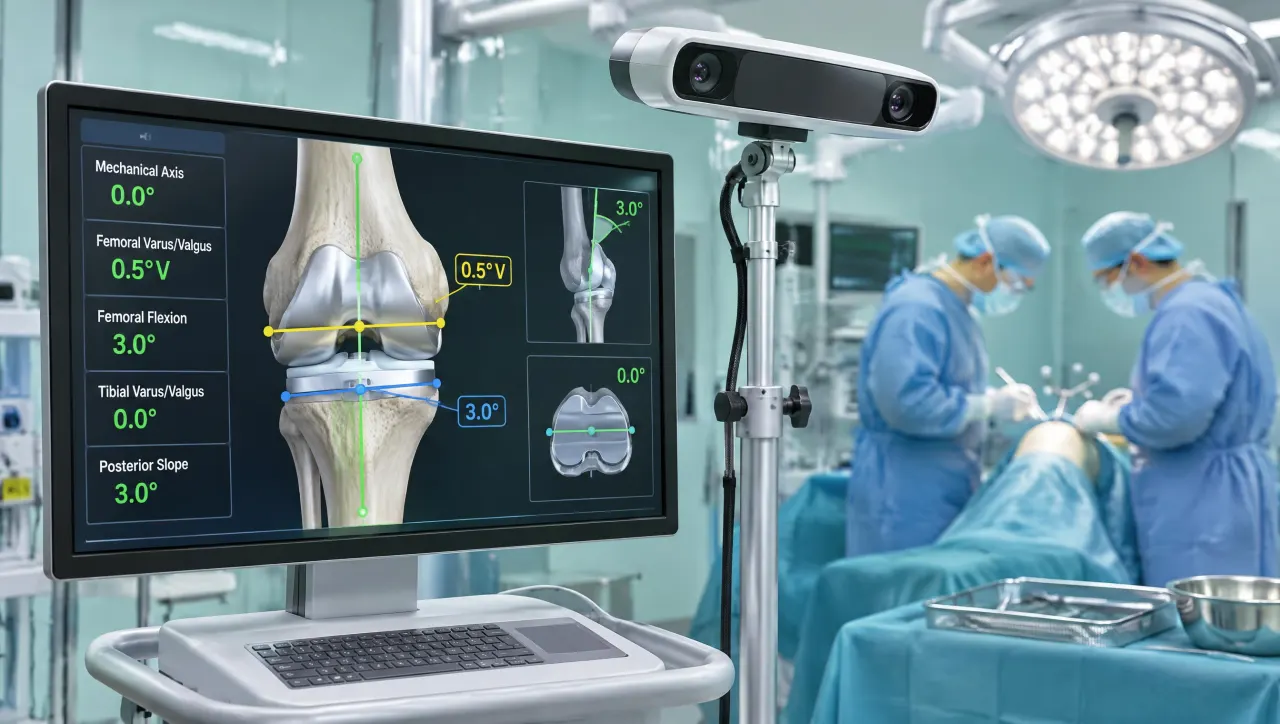
In robotic surgery, the surgeon carries out the operation with the help of a robotic arm. In our operations we use the robotic arm system called Mako (Makoplasty). It is always the surgeon who performs the operation and makes the decisions; the robotic arm does not move on its own, it makes the surgeon's hand more accurate.
How does the robotic arm system work?
Before the operation, a CT scan of your knee is taken and a three-dimensional model of your knee is created on a computer. The operation is planned specifically for you on this model before you even enter the operating theatre.
During the operation, markers placed on the thigh and the lower leg allow cameras to track the position of your knee in real time; the robotic arm knows exactly where the bone is.
- Three-dimensional modelA three-dimensional model of your knee is built from the CT scan.
- Personalised planningThe size of the implant, the amount of bone to be cut and the angles at which the implant will sit in the knee are determined. During the operation, the ligament balance of your knee is measured and the plan is given a final adjustment.
- Carried out with the robotic armThe surgeon makes the cuts by guiding the robotic arm. The arm does not allow the cut to go beyond the planned boundary, so the surrounding ligaments and healthy tissues are protected.
The most important feature of this method is that the implant is placed in the planned position with millimetre precision.
What does robotic surgery aim to achieve?
For joint replacement surgery to be successful, it is very important that an implant of the appropriate size is positioned correctly in the joint. Robotic surgery aims for the following; results may vary from patient to patient:
- Correct positioning of the implant in the planned position
- Selection of an implant of a size that suits the bone
- Correct alignment of the shape of the leg
- A long-lasting implant
- Reducing bone loss
- Reducing blood loss
- A small skin incision
- Reducing pain after surgery
- Reducing the risk of embolism (a blood clot that travels)
- Increasing the range of knee bending
- An early return to daily life
Are there any disadvantages?
- Increased cost
- The need for a CT scan before surgery
- The operation may take slightly longer
Conventional and robotic surgery: how the methods differ
Conventional knee replacement surgery is also a method that has been performed successfully for many years. The difference between the two methods lies in the way the operation is planned and carried out.
| Conventional knee replacement | Robotic knee replacement | |
|---|---|---|
| Planning | With X-ray measurements | With a three-dimensional model prepared from the CT scan |
| Implant positioning | With mechanical guides | According to the plan, with the help of a robotic arm |
| Imaging before surgery | X-ray | X-ray and CT scan |
| Length of operation | 1.5–2 hours on average | May be slightly longer |
| Cost | Lower | Higher |
Who is a candidate for robotic knee replacement?
If most of the following apply to you, you may be a candidate for knee replacement:
- Being over 60
- Long-standing, severe joint pain that does not go away
- No response to painkillers, physiotherapy and injections into the joint
- Taking painkillers continuously and in ever-increasing doses to relieve the pain
- The distance you can walk getting shorter and shorter
- Restricted joint movement, being unable to straighten the knee fully
- Visible deformities of the legs, such as shortening and bowing
- Everyday tasks such as climbing stairs, sitting down and getting up, and putting on socks becoming difficult
Age is not a hard-and-fast criterion. For example, a 35-year-old patient whose joint has been severely damaged by rheumatic disease or an accident could not be expected to wait 25 years for surgery. The decision is made together, on the basis of an examination, an X-ray and your quality of life.
Which operations are performed with the robotic arm?
With the robotic arm system, as well as total knee replacement, partial knee replacement and hip replacement operations can also be performed.
Robotic knee replacement in videos
Frequently asked questions
What is robotic knee replacement surgery?
It is an operation in which the knee implant is put in place with the help of a robotic arm guided by the surgeon. A CT scan taken before surgery is used to build a three-dimensional model of your knee; the size of the implant, the amount of bone to be cut and the angles at which the implant will sit are planned on this model specifically for you. During the operation, the robotic arm ensures that the cuts are made to this plan with millimetre precision.
Does a robot perform the operation?
No. The surgeon performs the operation; the robotic arm does not move on its own. The surgeon guides the arm by hand, while the system does not allow the cut to go beyond the planned boundaries. The decision rests with the surgeon at every stage.
What does robotic surgery aim to achieve?
The aims are correct positioning of the implant in the planned position, selection of an implant of a suitable size, correct alignment of the shape of the leg, reducing bone and blood loss, reducing pain after surgery and an early return to daily life. Results may vary from patient to patient.
Does robotic surgery have any disadvantages?
It increases the cost, requires a CT scan before surgery and may lengthen the operation slightly.
How long does knee replacement surgery take?
The operation takes 1.5–2 hours on average. Including preparation and recovery after surgery, it is 3–4 hours in total before the patient leaves the operating theatre and returns to their room.
When will I be on my feet after the operation?
Patients start walking the day after the operation, putting weight on the operated leg, with a hand-held support such as a walking frame or a walking stick.
 This page was prepared by Prof. Dr. Levent Altınel. The information is for general guidance only; it is no substitute for an examination and diagnosis.