
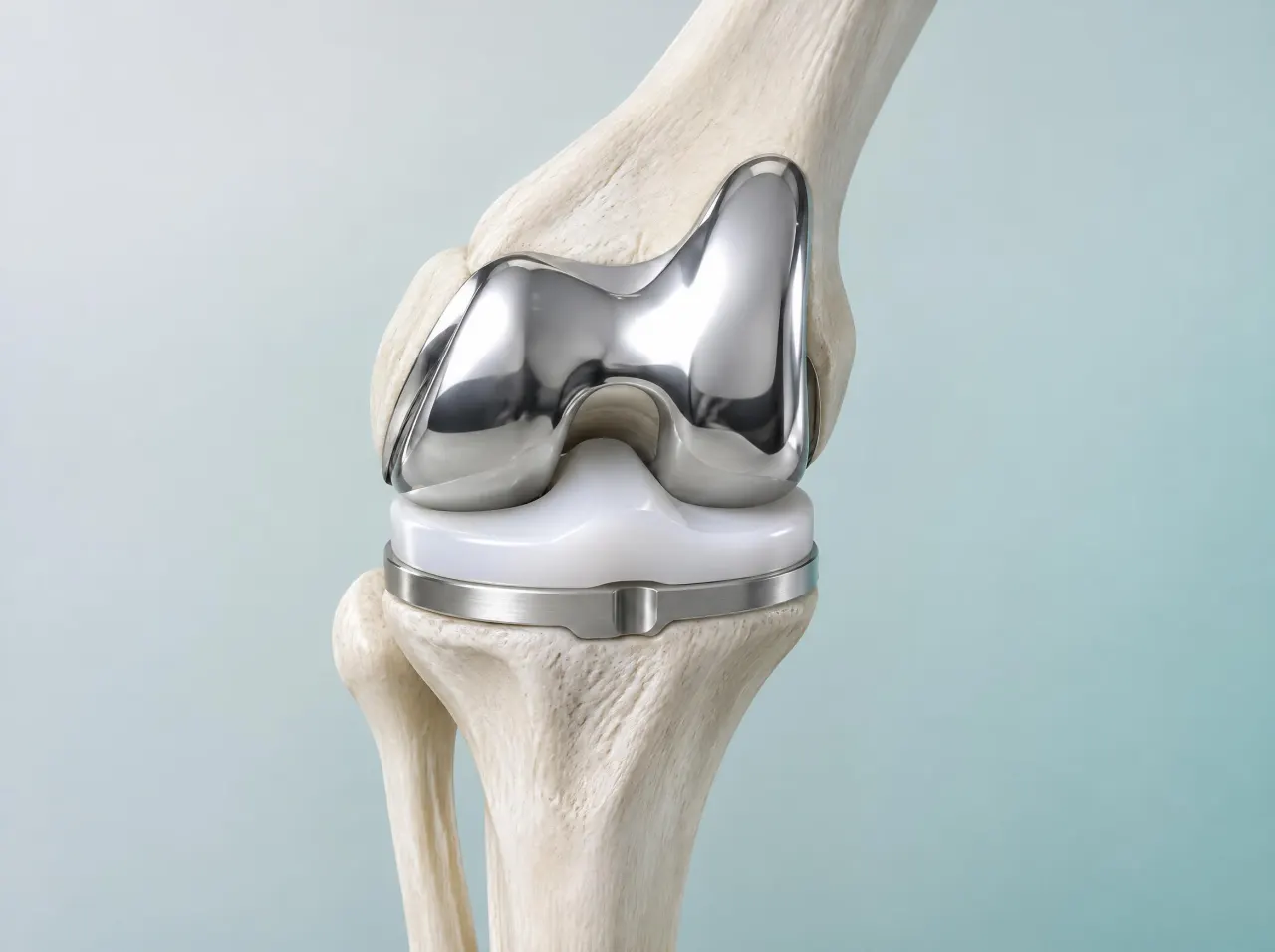
What is joint replacement surgery?
Normally, the joint surfaces are covered with slippery, smooth cartilage; this is what makes movement smooth and painless. When the cartilage wears away, friction increases and movement becomes restricted and painful. This condition is called osteoarthritis (arthrosis), often described as “wear and tear” of the joint. The procedure of replacing the damaged joint surfaces is called joint replacement surgery.
When should I have joint replacement surgery?
Whatever the cause, joint replacement surgery becomes necessary when damage to the joint leads to severe pain and loss of movement, and when these symptoms are not relieved by rest, painkillers or physiotherapy and reduce your quality of daily life.
To avoid repeated revision operations, it is recommended that the replacement is carried out after the age of 60–65, but this condition does not always apply. The real criterion is not age; it is that the pain does not respond to treatment and restricts your life.
For which conditions is knee replacement performed?
- Osteoarthritis of the joint (arthrosis)
- Rheumatic diseases: rheumatoid arthritis, ankylosing spondylitis, etc.
- Avascular necrosis (following the use of medicines such as cortisone)
- After unsuccessful operations: fractures that have not healed, problematic implants
- Joint damage caused by previous infections
When joint replacement is not recommended
- Active infection around the joint
- Progressive bone loss (osteoporosis), neuropathic joint
- Muscle diseases and paralysis
- Morbid obesity
- Dementia and inability to care for oneself
What is the success rate of knee replacement surgery?
In patients who suffer pain and difficulty walking because of cartilage damage and who cannot carry out their everyday tasks, joint replacement surgery removes many of these difficulties. The success rate of these operations is over 90%.
What does success depend on?
- Good surgical technique
- The quality of the implant used
- Good control of bleeding
- The technical facilities of the operating theatre and the use of additional techniques such as robotic surgery
- The quality of care after the operation
- The patient doing their exercises and following the doctor's advice regularly
What materials are implants made of?
Implants consist of metal (cobalt-chrome, titanium, zirconium), plastic (polyethylene) or ceramic surfaces. The materials used do not generally cause an allergic reaction in the body; they are resistant to deterioration and breakage.
What type of anaesthesia is used, and how long does the operation take?
The method of anaesthesia is decided together with the anaesthetist at the pre-operative assessment. For knee replacement, numbing from the waist down (spinal/epidural anaesthesia) is generally preferred: because the patient is not put to sleep, lung problems do not occur and no pain is felt for 5–6 hours after the operation.
The operation takes 1.5–2 hours on average. Including preparation and recovery, it is 3–4 hours in total before the patient returns to their room.
How is pain controlled in knee replacement surgery?
Patients' greatest worry before surgery is the “fear of pain”. Once pain has started it is hard to stop; for this reason, pain treatment is started before any pain is felt.
- Before the operation: pain is eased before it starts with medication given into a vein.
- At the end of the operation: an injection into different areas inside the knee reduces pain in the first 24 hours.
- Epidural catheter: this is effective in eliminating pain both during the operation and afterwards.
- Pain button (PCA): the device delivers painkillers at regular intervals; when the pain increases, the patient presses the button to give themselves an extra dose.
What are the risks?
Joint replacement operations have been performed successfully for many years. Nevertheless, despite all the precautions taken, some unwanted events can occur:
- Infection: The rate after knee replacement is between 1% and 3%. Conditions that affect the immune system, such as diabetes, and another source of infection in the body increase the risk. Preparation before surgery and the use of antibiotics reduce the risk.
- Looseness (instability): This can occur when the bone cuts are not made properly or when ligament balance cannot be achieved.
- Blood clot formation: Efforts are made to prevent this with early movement, bandaging and a compression device, and blood-thinning medication.
- Early wear of the implant, bleeding, fracture, and damage to blood vessels and nerves.
How should I prepare for the operation?
- Tell your doctor about any illnesses and operations you have had and the medicines you take.
- Be sure to ask your doctor how many days before the operation you should stop medicines that increase bleeding, such as blood thinners, aspirin and painkillers; do not stop any medicine on your own initiative.
- Have crutches or a walking frame, a raised toilet seat, and grab rails for the bathroom and toilet ready at home.
- Keep ice or cooling gel packs to hand for cold therapy.
- Learn the exercise programme before the operation and start doing it.
- Stop smoking before the operation.
What is knee replacement revision?
Nowadays the life of implants has been extended to as much as 15–20 years. At the end of this period, an implant or implant components that have come away from the bone and loosened are replaced in an operation. This procedure is called revision surgery.
Frequently asked questions
Is there an age limit for knee replacement?
In osteoarthritis, having the replacement after the age of 60–65 reduces the number of implant revision operations that may be needed later on. However, age is not a hard-and-fast criterion. Pain and loss of movement that do not respond to painkillers and other treatments and that restrict daily life are the real criteria that determine the timing of surgery.
How long does knee replacement surgery take?
The operation takes 1.5–2 hours on average. Including preparation and recovery after surgery, it is 3–4 hours in total before the patient leaves the operating theatre and returns to their room.
Is the operation very painful?
Pain treatment is started before the pain even begins. Thanks to medication given before surgery, an injection into the knee at the end of the operation, an epidural catheter and a pain pump controlled by the patient (PCA, the “pain button”), the first few days in particular can be got through with only mild pain.
What type of anaesthesia is used?
This is decided together with the anaesthetist. For knee replacement operations, numbing from the waist down (spinal/epidural anaesthesia) is generally preferred. Because the patient is not put to sleep, lung problems are less common and no pain is felt for 5–6 hours after the operation.
How many days will I stay in hospital?
The average hospital stay is 2–4 days.
How many years does a knee implant last?
With appropriate surgical technique and modern implant designs, the life of implants has been extended to as much as 15–20 years. Keeping your weight down and your muscles strong, and avoiding excessively strenuous activities, extends this period.
 This page was prepared by Prof. Dr. Levent Altınel. The information is for general guidance only; it is no substitute for an examination and diagnosis.